

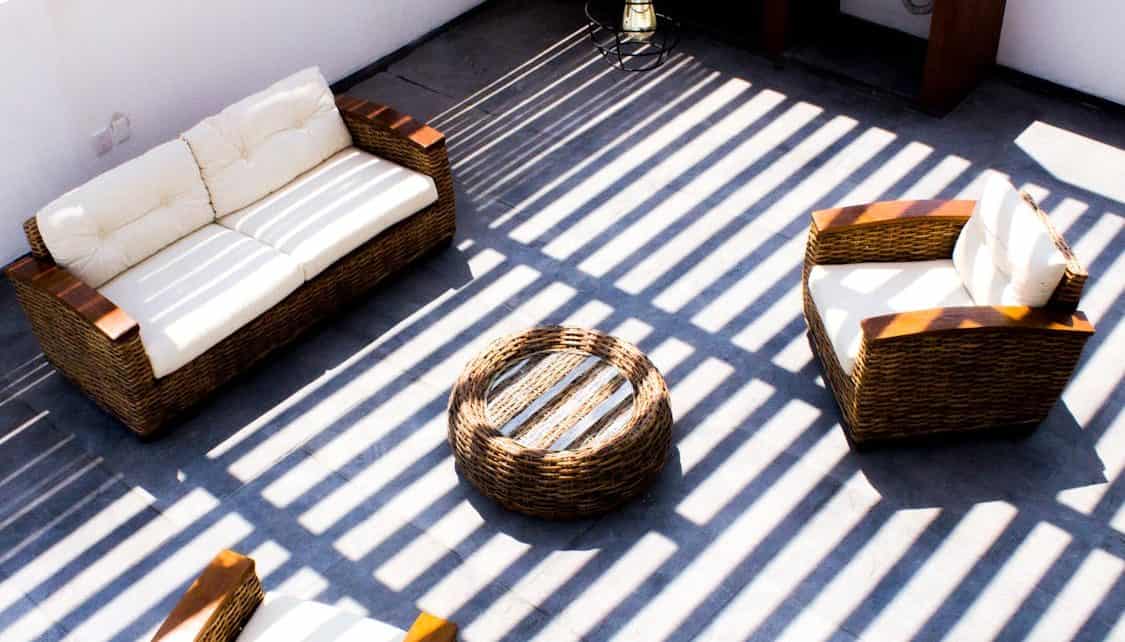
For decades the pergola was defined by what it could not do. It threw beautiful striped shadows across a patio, supported a climbing vine, and looked the part in any backyard photo. What it could not do was change. The slats sat where they sat, and the homeowner worked around them.
That limitation is now disappearing, and it is reshaping which structures Las Vegas homeowners actually choose. The fixed pergola has not vanished, but it is increasingly losing ground to a motorized cousin that does the one thing the original never could: it adjusts.
The shift matters more in a climate like Southern Nevada’s than almost anywhere else, because here the gap between “open to the sky” and “fully shaded” is the difference between a usable afternoon and a punishing one.
What Changed About the Pergola
The core innovation is the motorized louvered roof. Instead of fixed slats, adjustable aluminum louvers rotate on command, opening to let sunlight and air through, or closing to seal out heat and rain entirely.
Industry trend roundups for 2026 now place these adjustable systems at the center of modern pergola design, noting that motorized systems paired with smart home integration have become the defining feature separating a current pergola from a dated one.
The louvers are typically paired with sensors. When rain is detected, the blades close into a watertight seal and channel runoff through hidden gutters in the beams and posts. When wind crosses a threshold, the system can open or lock the blades to protect itself.
Control has moved to the phone. App and voice commands let a homeowner reposition the roof from inside the house or away from it entirely, which turns the structure into something closer to an operable room than a static shade.
Why the Timing Fits Las Vegas
A fixed pergola is a compromise built into the design. Angle the slats for afternoon shade and you lose the morning sun; space them for airflow and you accept that some direct light always gets through.
In a mild climate that compromise is tolerable. In the Mojave, where summer sun is relentless for most of the day and most of the year, a structure that only ever offers partial, fixed shade leaves a lot of the patio unusable when it matters most.
An adjustable louvered roof removes the compromise. Closed, it behaves like a solid cover and blocks the sun outright; opened, it lets the cooler morning and evening air move through; angled, it tracks the sun through the day.
The same adjustability handles the valley’s other moods. The rare but violent monsoon downpour gets sealed out, and the brief comfortable shoulder seasons get full openness, all from the same structure.
That flexibility is why so many homeowners weighing a traditional pergola against a solid cover are increasingly landing on the louvered option, which splits the difference between the two.
What to Weigh Before You Upgrade
The adjustable roof is not automatically the right answer for every backyard, and a few practical considerations separate a smart purchase from an expensive regret.
Cost is the first. A motorized louvered system carries motors, sensors, and electronics that a fixed wood or aluminum pergola does not, and that complexity shows up in the price and in the long-term maintenance picture.
Build quality is the second, and it is where the desert is unforgiving. The structure has to be powder-coated aluminum rated for sustained UV and heat, and the motors and electronics have to be sealed against the dust that defines a Las Vegas summer, or the moving parts become a liability.
Installation is the third. A roof that seals against rain and holds firm in a 70-mile-per-hour gust is only as good as its engineering and anchoring, which is an argument for a licensed local installer who builds for valley conditions rather than a generic kit.
For homeowners who get those three things right, the payoff is a backyard that works across far more of the year than a fixed structure ever allowed. The pergola is not being abandoned in Las Vegas. It is being rebuilt to finally keep up with the climate it has always had to sit under.