
California’s building rules turned a page at the start of the year, and the shift is worth understanding for anyone planning outdoor work. The state’s 2025 Energy Code, part of the Title 24 standards, took effect January 1, 2026, tightening efficiency requirements for new construction, additions, and alterations across the state.
The code is best known for pushing heat pumps and electrification, but it also sits inside a broader tightening of how California treats energy use in and around buildings, including lighting. For San Diego homeowners thinking about a landscape lighting project, that context is useful even when the code does not bear directly on a small low-voltage install.
The honest version of the story is more measured than the headlines, and that is exactly why it is worth getting right.
What the Code Does and Does Not Reach
The 2025 Energy Code applies to projects that pull a building permit on or after January 1, 2026, covering new homes, multifamily and commercial buildings, and significant additions or alterations. Projects permitted before that date generally fall under the previous 2022 code.
Its lighting provisions bite hardest on new construction and nonresidential work, where lighting power allowances and controls are regulated as part of a building’s overall energy budget. A ground-up house or a major remodel will feel these requirements; a modest, standalone low-voltage landscape lighting system typically operates in a much lighter-touch space.
That distinction matters because it is easy to overstate. Most residential landscape lighting in San Diego is already low-voltage LED, drawing a fraction of the power older systems used, so the direction the code pushes, toward efficient fixtures and smart controls, is largely the direction quality outdoor lighting already moved on its own.
The practical upshot for a homeowner adding lighting to an existing yard is that the energy code is more backdrop than obstacle. The real constraints on outdoor fixtures in this region tend to come from local light-pollution rules rather than the statewide energy standard, which is a separate conversation worth having.
Why Efficient Lighting Is the Standard Now Anyway
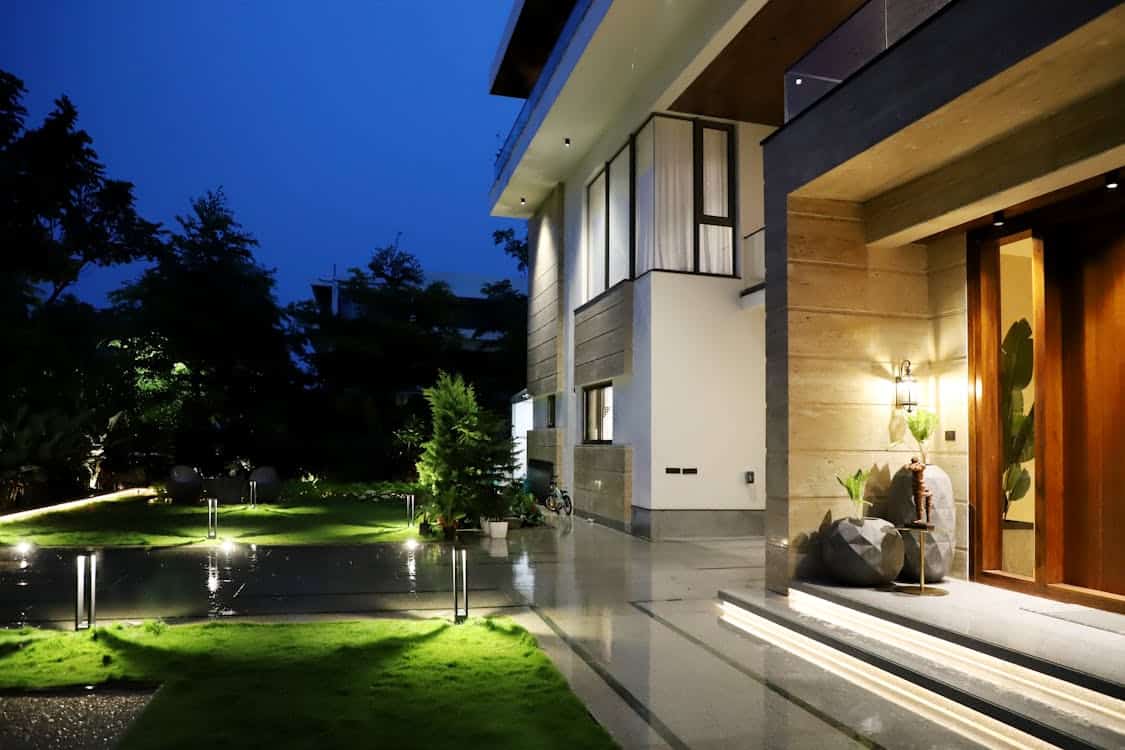
Even where the code does not strictly compel it, the logic behind it has already reshaped how landscape lighting is designed. LED technology changed the economics so thoroughly that efficient, controllable systems are simply the default a competent designer reaches for.
The shift to LED cut energy draw dramatically while improving the quality and control of light. A modern system can run more fixtures on a smaller transformer, last far longer between replacements, and dim or schedule itself, all of which align neatly with the efficiency direction the state keeps reinforcing.
Controls are the second half of the story. Timers, dimming, and smartphone scheduling let a homeowner light a yard only when and where it is needed, which is both the energy-conscious approach and, conveniently, the approach that makes a landscape look its best after dark. Efficiency and good design point the same way.
Material and fixture quality round it out. In a coastal region, solid brass or marine-grade fixtures and proper waterproof connections matter for longevity, and pairing durable hardware with efficient LEDs produces a system that is cheap to run and slow to fail. The code’s spirit and a quality install have converged.
How to Plan a Project in This Environment
For a homeowner, the takeaway is not to fear Title 24 but to design with its direction in mind, because the efficient, well-controlled approach the state favors is also the one that produces the best-looking, lowest-hassle result.
If the lighting is part of a larger permitted project, new construction or a substantial remodel, the timing of the permit determines which code applies, so it is worth confirming the effective edition with the local building department before submitting plans. Filing on either side of the changeover can affect what is required.
For a standalone landscape lighting upgrade, the energy code is rarely the gating factor, and the planning conversation should center on fixture quality, transformer sizing, controls, and how the light serves the yard. Efficient LEDs and smart scheduling deliver compliance-friendly performance almost as a byproduct of good design.
It also pays to remember that codes evolve on a three-year cycle and that local jurisdictions can adopt amendments stricter than the state baseline, so current requirements should be confirmed for the specific project and location rather than assumed. What is accurate this year may shift at the next update.
The larger point is that California keeps ratcheting toward efficiency, and outdoor lighting has largely already arrived there. A San Diego homeowner planning a project in 2026 is designing into a settled consensus, efficient LEDs, smart controls, durable fixtures, that satisfies the code’s intent and simply makes for a better-lit yard.
It also helps to separate the two regulatory worlds a project touches. The energy code governs how much power a system is allowed to draw and how it must be controlled, mostly on new construction, while local light-pollution rules govern how and where light is allowed to fall. A homeowner who keeps those two questions distinct will have a far easier time understanding what actually applies to their yard.
The encouraging reality is that meeting both is mostly a matter of hiring well and specifying quality. A designer who works in low-voltage LED, sizes the transformer correctly, uses marine-grade fixtures, and builds in scheduling will produce a system that is efficient by default and easy to keep compliant as codes evolve. The constraints reward good practice rather than punishing it.